Broad Peak Expedition (8051m,26,414 ft)
The world lists Broad Peak as the twelfth-highest 8000-meter peak. Some climbers call it one of the easiest 8000-meter peaks. Broad Peak, on the border of Pakistan and China, has seen ten fewer summits than Mount Everest and lies next to K2. Climbers say that they have used Broad Peak as a stepping stone to upcoming adventures on peaks above 8000m, including its neighbor K2. Climbers classify it as an AD (Assez Difficile) climb, meaning it is fairly difficult
Significant achievements and tragic events shape climbing history. Austrian expedition team led by Marcus Schmuck, Hermann Buhl, Kurt Diemberger, and Fritz Wintersteller successfully first summited on June 8-9, 1957.
There were many attempts after the first ascent. In 1988 Maciej Berbeka reached the near to summit around 8028 meter which is also called rocky summit during the winter expedition, believing he had summited. In 2013, Polish team led by Krzyszrof successfully make the first winter ascent. From 2016, traffic has been increased in broad peak expedition.
Climbers have classified the climbing route into two routes: the Normal Route and the Carsolio Route.
They set up Broad Peak base camp around 4900-5000m. Satori's team fixes four camps before the summit.
The fixing of Camp I is around 6000m/19,685ft.
Camp II is 6500m/21,325,
Camp III is 7100m/23,294ft
and Camp IV is 7500m/24,606ft.
Our climbing teams spend only 7-8 hours at Camp IV before the summit push. The climbers have an adequate acclimatization period behind them so there is no need to spend any more time at Camp 4. Almost 40% of climbers return down to Camp III and 60% to Camp II after their summit success. It takes another 2 days to descend to base camp.
Experience matters most during a climbing expedition, especially when aiming for the summit. Satori Adventures employs guides who have summited the world's highest peak, Mount Everest, multiple times—some with a record of up to 15 successful ascents. Our guides are technically proficient in advanced climbing techniques such as ice climbing, rock climbing, and snow climbing. They are also skilled in setting up high-altitude camps and fixing ropes to ensure the safety and success of your expedition. All our guides are certified and properly trained in first aid, altitude sickness prevention, and high-altitude rescue protocols. During the climb, trekkers can observe diverse local cultures and traditions, with which our guides are very familiar, adding cultural depth to the journey. Most of our guides are knowledgeable in multiple languages, including English, French, Spanish, Italian, and Japanese, making communication more comfortable and inclusive for international climbers.
Choose an experienced provider.
It is essential to choose the right expedition guide service—one that not only cares for its clients but also ensures the best, safest, and most secure mountaineering experience. In Nepal, there are many trekking companies that offer 7,000-meter expeditions, including Mount Putha Hiunchuli. However, only around 45 to 50 companies regularly operate expeditions on peaks of 7,000 meters and above, including 8,000-meter mountains. We at Satori Adventures are proud to be among these few elite companies, consistently organizing and successfully running high-altitude expeditions with an excellent success rate. It is very important that the climbers who choose Satori Adventures for this trip of a lifetime have expectations that are compatible with the program we offer and the style of expedition Satori Adventures runs. We aim to assemble a team of compatible climbers committed to summiting, prioritizing safety and support, not just filling expedition spaces.
Diminutive climbing team members
We are always striving to develop and grow our operational systems to ensure you get the best possible experience. Our expedition members deserve nothing less than the best possible conditions and opportunity to be successful. We do this by limiting our team size, which makes us more flexible as a team and helps ensure the team has the best weather windows for a summit push. We also try to develop an atmosphere where members feel they are climbing as a family, with each guide, Sherpa, and team member working together and striving for a common goal.
We provide maximum summit success.
The Satori Adventures method and tactical approach to climbing Mt. Putha Hiunchuli have seen us achieve the highest success rates. Our extensive experience gives us the edge for making tactical decisions. We provide a consistently higher Sherpa and Guide ratio than any other operator, resulting in more support and backup for your summit attempt, which provides a greater safety margin and chance of success. We always provide an efficient ratio of client to Sherpa/guide.
We provide highly qualified team leaders and Sirdars.
The Nepal Mountaineering Association, the International Federation of Mountain Guides Associations (IFMGA), the American Mountain Guides Association, or other professional training associations professionally trained and assessed many of our guides. These results show that our guides have a greater repertoire of skills that enable them to provide a dedicated level of security to you during the expedition. Most of our guides have also been guiding in the Himalaya range for many years, have many 8,000-meter summits to their credit, and have at least 3 years' experience.
We provide the highest-quality camp facilities and food.
Satori Adventures provides the best possible camp facilities, food, and service. People regard our expedition cooks as the best in the business. Our cooks provide meals that sustain your body for the rigors of the ascent. We also provide diverse choices to suit vegetarian, vegan, Indian, or any specified requests. If you have a special nutritional request, please let us know 50 days prior to the start of your expedition so we can plan accordingly. Satori Adventures never compromise on the quality and safety of our clients.
First Ascent: June 9, 1957 by Fritz Wintersteller, Marcus Schmuck, Kurt Diemberger
Meals: Full board accommodation
Highest access: (8051M/26414ft.)
Duration: 52 Days
Group Size: 02-10 people
Co-ordinates: 35°48′39″N 76°34′06″E
Location: Gasherbrum massif in Baltistan on the border of Pakistan and China
Country: Pakistan
Airport: Islamabad
Grade: Low technical difficulty
Accommodation: Three star hotel accommodaiton Islamabad and Skardu
Transportation: Flight, Jeep
Best season: Summer season
Major Activity: Trekking/Climbing
Culture: Punjabis, Kashmiris, Sindhis, Muhajirs, Makrani
Mode of Travel: Tea House/ Camping
Climbing route: West Ridge
Himalayan sights: K2 and G2

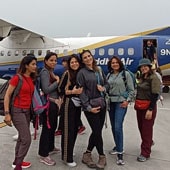
I have been bringing groups to Nepal primarily for trekking the high Himalayas and Satori is my business partner in Nepal. The service is just excellent..everything is spot on with Satori.
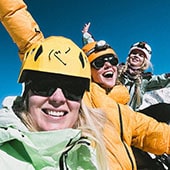
Satori Adventures is the best tour operator I have worked with in Nepal. Always great service and good prices. My first choice for my adventures in Nepal!
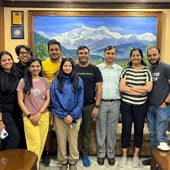
One of the most reputed and well managed agencies. The owner Mr Rishi is a true gentleman and knows the pulse of the mountains. His team his flexibility when it comes to management is truly exceptional.
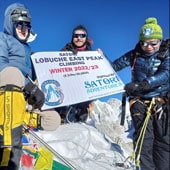
Satori Adventures is the best host for any activities in Nepal! We utilized their knowledge and experience in organizing high-altitude expedition for a part of our group. For another part of our team, they managed to provide an incredible hike to the base camp




 USA
USA MEXICO
 FRANCE
 CHINA
CHINA JAPAN
JAPAN